An evidence-based method: assess, personalise, train
The screen when it adds value, paper when it matters — always personalised.
- 1
Assess
In minutes, a precise profile of reading, numerical processing and calculation, sustained attention and working memory. Digital, because measurement demands it.
- 2
Personalise
Every activity adapts to each child's pace and progress throughout the school year. The same profile also generates personalised paper worksheets.
- 3
Train
15 minutes a day. On screen when interactivity adds value, on paper when it is time to consolidate. Progress shows up in clear reports.
3 formats, the same tracking
Each child gets activities matched to their level that adapt to their daily progress. They can do them in the app or on paper worksheets. To mark the paper, just take a photo: the results go into the system and the next activities adjust.
Choose the option that best fits your needs
Paper
With a photo of the worksheet, the result is recorded for tracking and assessing learning. A personalised work plan is built by analysing the child’s daily progress.
App
Recording accuracy and response time is what drives the tracking and assessment of learning. A personalised work plan is built by analysing the child’s daily progress.
App + paper
Results from the app and from paper are merged automatically. Progress is analysed taking response time into account, and a personalised work plan is built by analysing the child’s daily progress.
The screen as a tool, not an end in itself.
It is a resource that can be chosen or not, depending on each user’s needs or preferences. If the app or app + paper format is chosen, we set a very limited amount of time: the aim is to improve academic performance.
How does the paper format work?
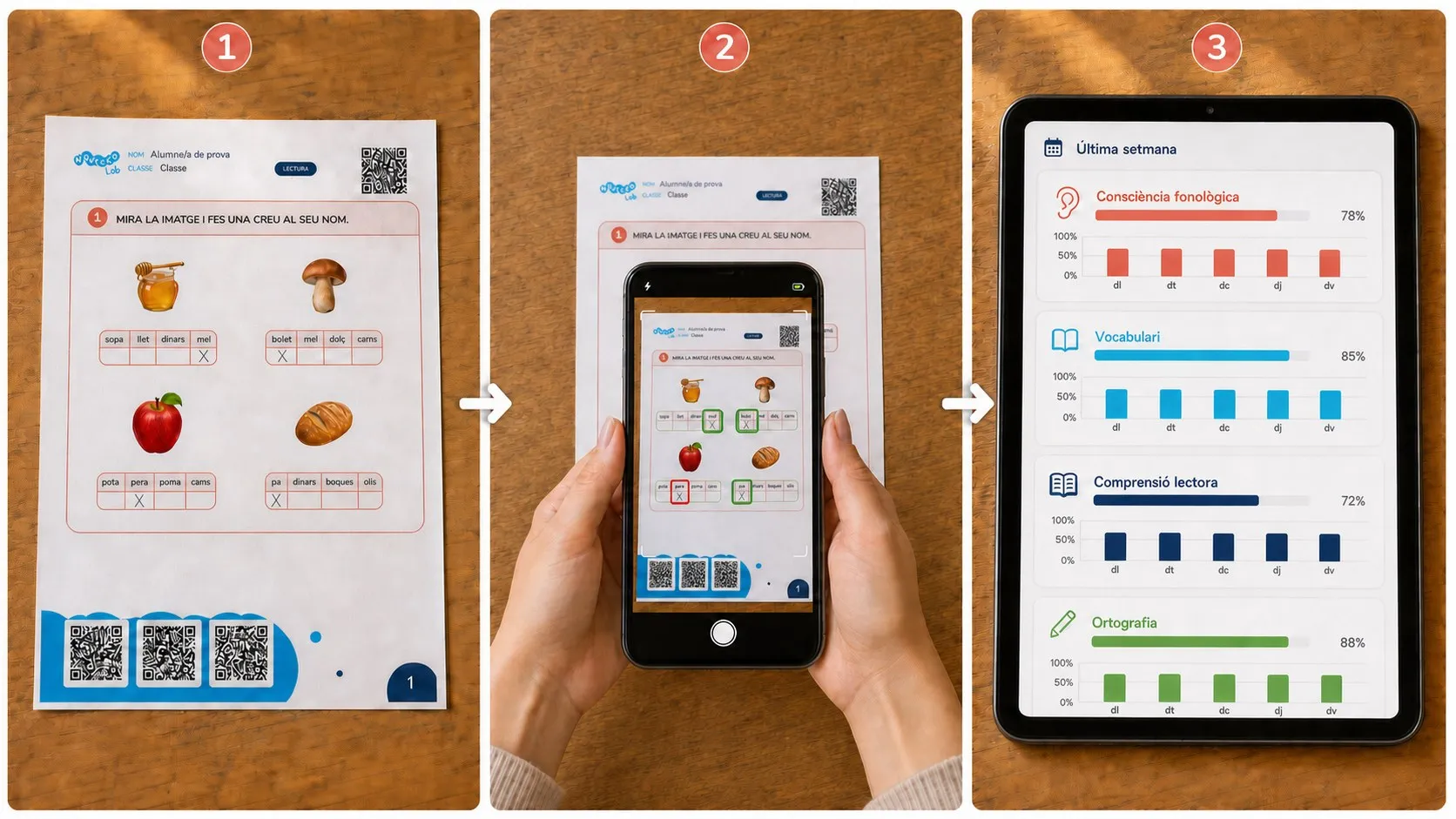
- You receive personalised worksheets for each pupil in your profile.
- From the photo and the QR code, we analyse the results.
- We collect the data and track progress so you can review it. You can generate more worksheets if you need them.
Digital and paper: the best of each format
We do not promote screen use. We use technology where it is irreplaceable — precise assessment, real-time adaptation, motivation through play — and paper where the evidence supports it: consolidation, writing, distraction-free practice.
NeurekaLab's gamification is designed to improve the learning experience, not to increase time online: short, structured sessions with no retention mechanics.
FAQS
Frequently asked questions about the method
How much screen time does NeurekaLab require?
Short sessions: 15 minutes a day. It can be less, because activities can also be done on paper, with worksheets that are marked from a photo.
What is personalised paper work?
NeurekaLab generates paper worksheets matched to each child's level. To mark them, just take a photo: the result feeds into tracking and the next activities adjust. You can work on paper only.
Doesn't gamification hook children to screens?
We use game elements to motivate learning, not to extend usage time. Sessions have a set duration and the system has no retention mechanics or rewards for time spent online.